Concrete Foundation – Ensuring Strength & Stability
There are two key factors that you want in a foundation: strength and stability. A well-designed concrete foundation provides the stability, safety, and durability that your home requires.
Prepping for a Concrete Foundation
Healthy soil is just as important as the footings and concrete foundation that lie upon it. When building any cement foundation it is a good idea to have the soil examined for its load-bearing quality. Consulting your local building department about the average frost depth in your area is also recommended. Concrete slabs and footings should be built on undisturbed virgin soil or compacted soil. The soil to be uniformly graded and well drained.
The Power of Concrete
Concrete is a mixture of Portland cement, gravel or crushed stone (coarse aggregate), sand (fine aggregate), and water. Once that mixture hardens it becomes one of the strongest building materials used today. Determining the right mix is the key to making strong, durable concrete. Too much water weakens the mixture but too little will render it almost useless.
The wet concrete is poured into molds. These forms, as they are called, are commonly made of lumber and plywood sheathing and shape the concrete as it hardens. The forms must be strong enough to withstand the force of the concrete pushing against it as the mixture dries. Concrete footings support foundation walls and should be set below the frost line to avoid frost heave damage.
Given the quick-drying nature of concrete, it is important to work quickly and handle it as close to the job site as possible. The mixture is poured into the farthest corner of the forms. Each new load is placed against the previous one and a shovel or hoe is used to spread the mixture evenly. Air bubbles form easily but are kept under control by stamping or jabbing a shovel or hoe in and out of the concrete.
The Curing Process
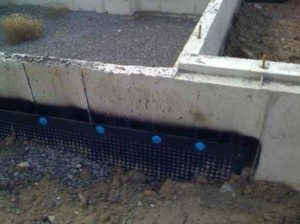
The curing process requires the concrete to remain moist. It is important to spray water on it from a garden hose. It is then usually covered with large plastic sheets or waterproof paper to prevent evaporation. The application of a curing compound to the damp surface is another way to keep moisture in.
The form-work can be removed after about a day, but be sure to do it carefully in order to avoid damage to the concrete. It will take about a month for the concrete to cure, so it’s advisable not to hammer or pry against it during this period.
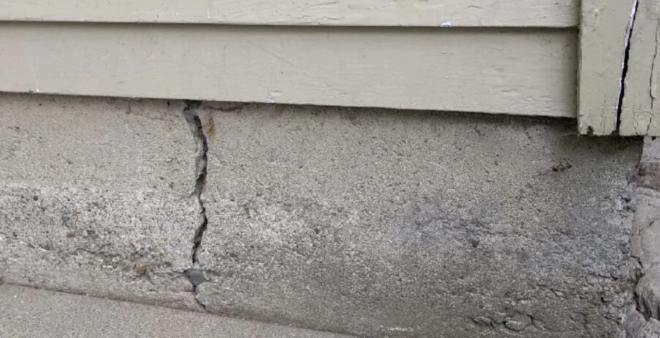
As for concrete repairs, small cracks can be fixed with a crack sealer, preferably a ready-mix material that can be set in place using a trowel. The sealer comes in liquid or a caulk-like form. Larger cracks may need to have weak spots chiseled out in order to widen out the bottom of the groove. Repairs can be carried out with a cement-and-sand mix.
The post Concrete Foundation – Ensuring Strength & Stability appeared first on ACCL Waterproofing.