How Proper Grading Protects Your Home from Water Damage
Why the slope of your yard plays a critical role in protecting your foundation, basement, and overall property.
When homeowners think about waterproofing, they often focus on foundation cracks, drainage systems, or basement leaks. However, one of the simplest and most effective ways to protect a home from water damage begins right outside—the grading of your property.
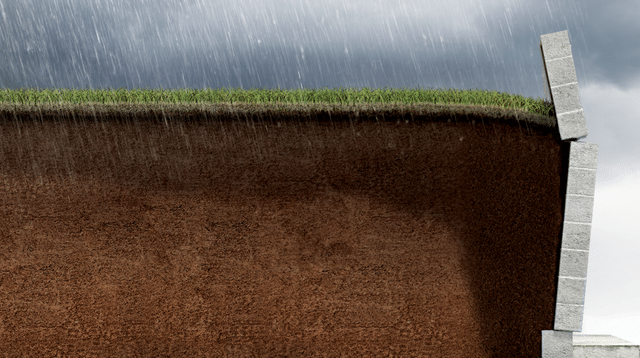
Proper grading ensures that rainwater and melting snow flow away from your home's foundation instead of collecting around it. When grading is neglected or improperly designed, water can accumulate near foundation walls, increasing the risk of basement leaks, foundation cracks, and costly structural damage.
Understanding the importance of grading can help homeowners prevent moisture problems before they start.
What Is Property Grading?
Property grading refers to the slope of the ground surrounding your home.
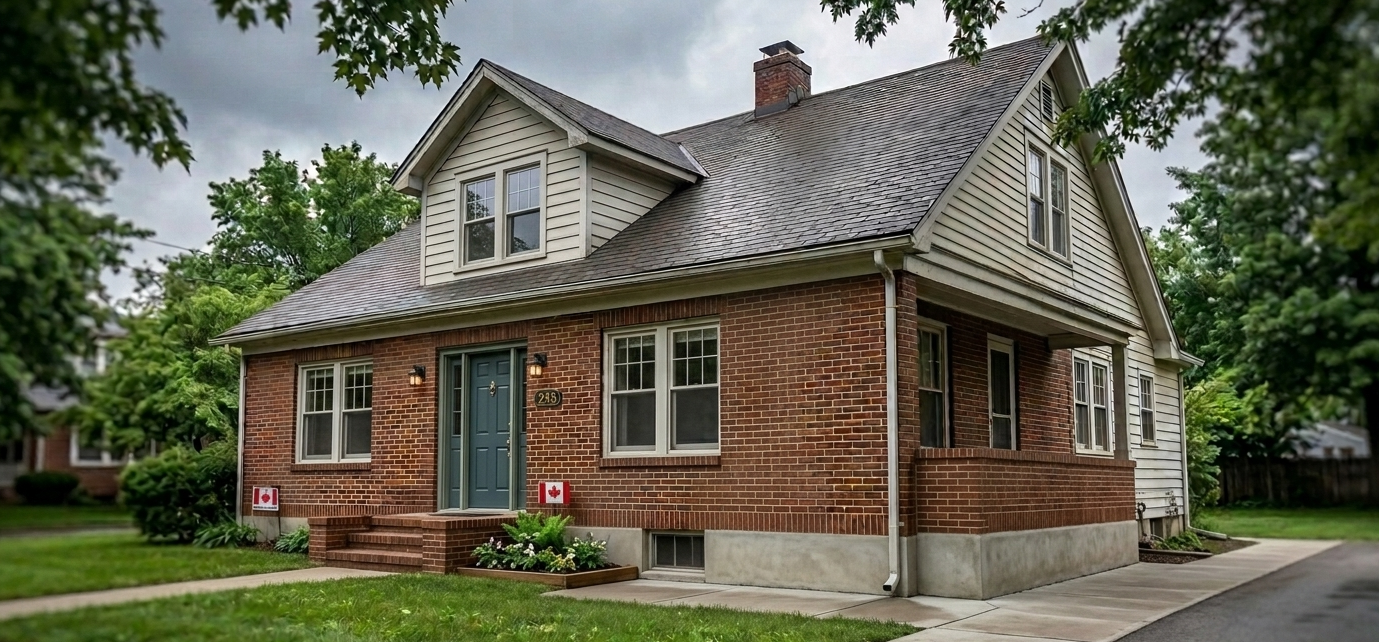
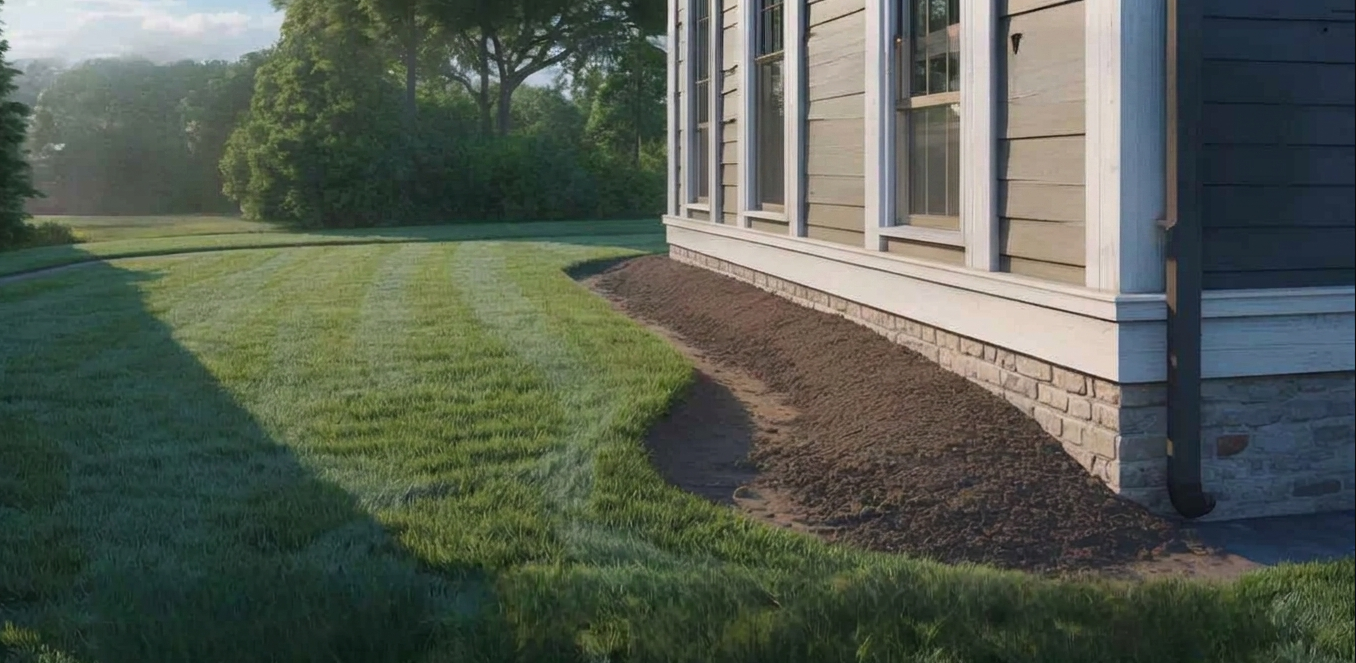
Ideally, the soil should gradually slope away from the foundation. This allows rainwater and surface runoff to naturally drain away from the structure rather than pooling around it.
A properly graded yard acts as the first line of defense against water intrusion by helping control where water travels after a rainfall.
Why Is Proper Grading Important?
Every time it rains, thousands of gallons of water may fall onto your roof, driveway, lawn, and surrounding property.
If that water is not directed away from your home, it can begin accumulating near the foundation.
Over time, excess moisture around the foundation can lead to:
- Basement leaks
- Foundation cracks
- Hydrostatic pressure
- Mold and mildew growth
- Soil erosion
- Structural deterioration
Even a high-quality waterproofing system can be challenged if large amounts of water are consistently allowed to collect beside the home.
How Poor Grading Leads to Basement Leaks
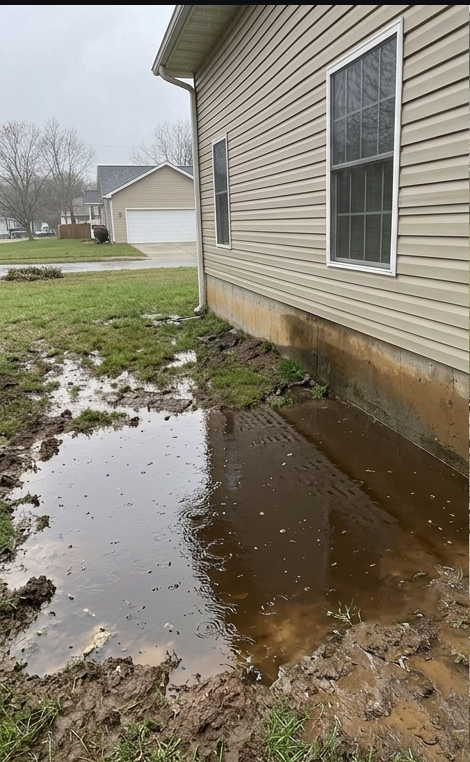
One of the most common causes of basement moisture problems is negative grading.
Negative grading occurs when the ground slopes toward the home instead of away from it.
When this happens:
- Rainwater flows directly toward the foundation.
- Water collects around basement walls.
- Soil becomes saturated.
- Hydrostatic pressure increases.
- Water begins searching for entry points.
Eventually, moisture may enter through cracks, wall-floor joints, utility penetrations, or porous concrete surfaces.
This process often explains why homeowners experience leaks after heavy rainfall.
Common Signs of Poor Grading
Many grading issues can be identified during a simple walk around your property.
Watch for:
✅ Standing water near the foundation
✅ Soil that slopes toward the house
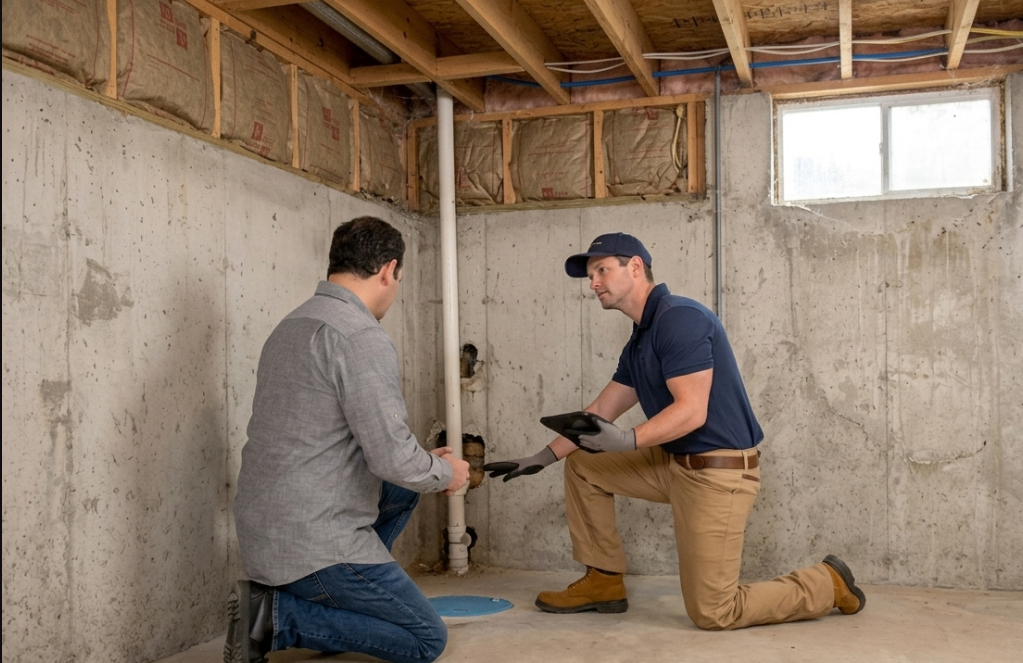
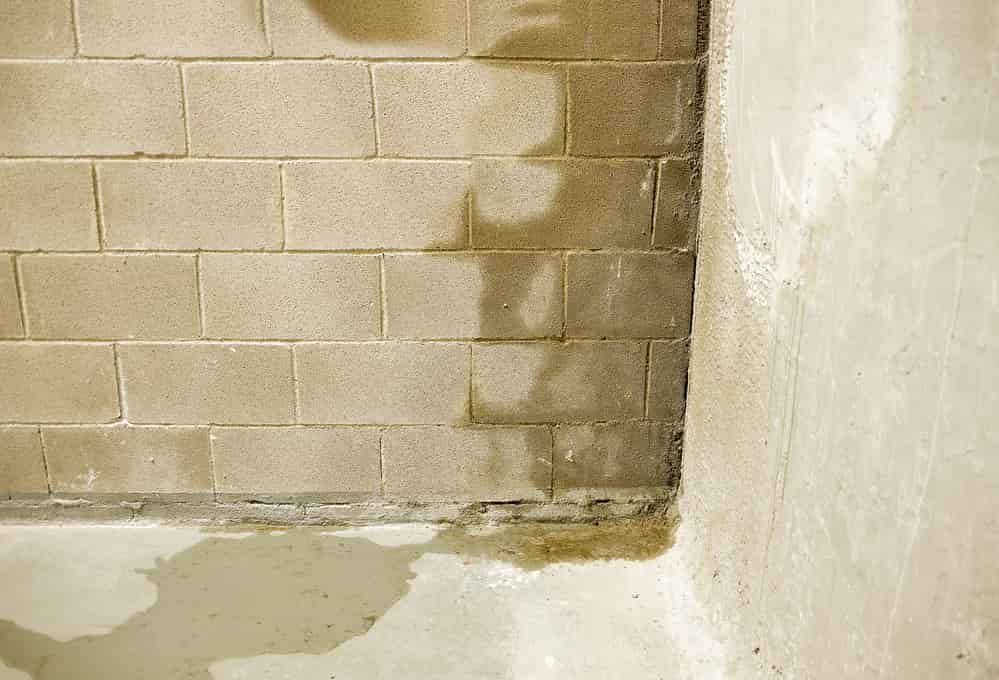
✅ Water stains on basement walls
✅ Damp basement corners
✅ Erosion around the home
✅ Soggy landscaping beds
✅ Musty odors in the basement
If you notice any of these warning signs, it may indicate that water is not draining properly.
How Much Slope Is Needed?
As a general guideline, the ground should slope away from the foundation by approximately six inches over the first ten feet.
This gradual slope encourages water runoff while helping prevent erosion.
Every property is unique, however, and drainage solutions should be tailored to the specific conditions of the site.
Grading and Waterproofing Work Together
Proper grading is an important part of a complete waterproofing system. Other components that help protect your foundation include:
Gutters and Downspouts
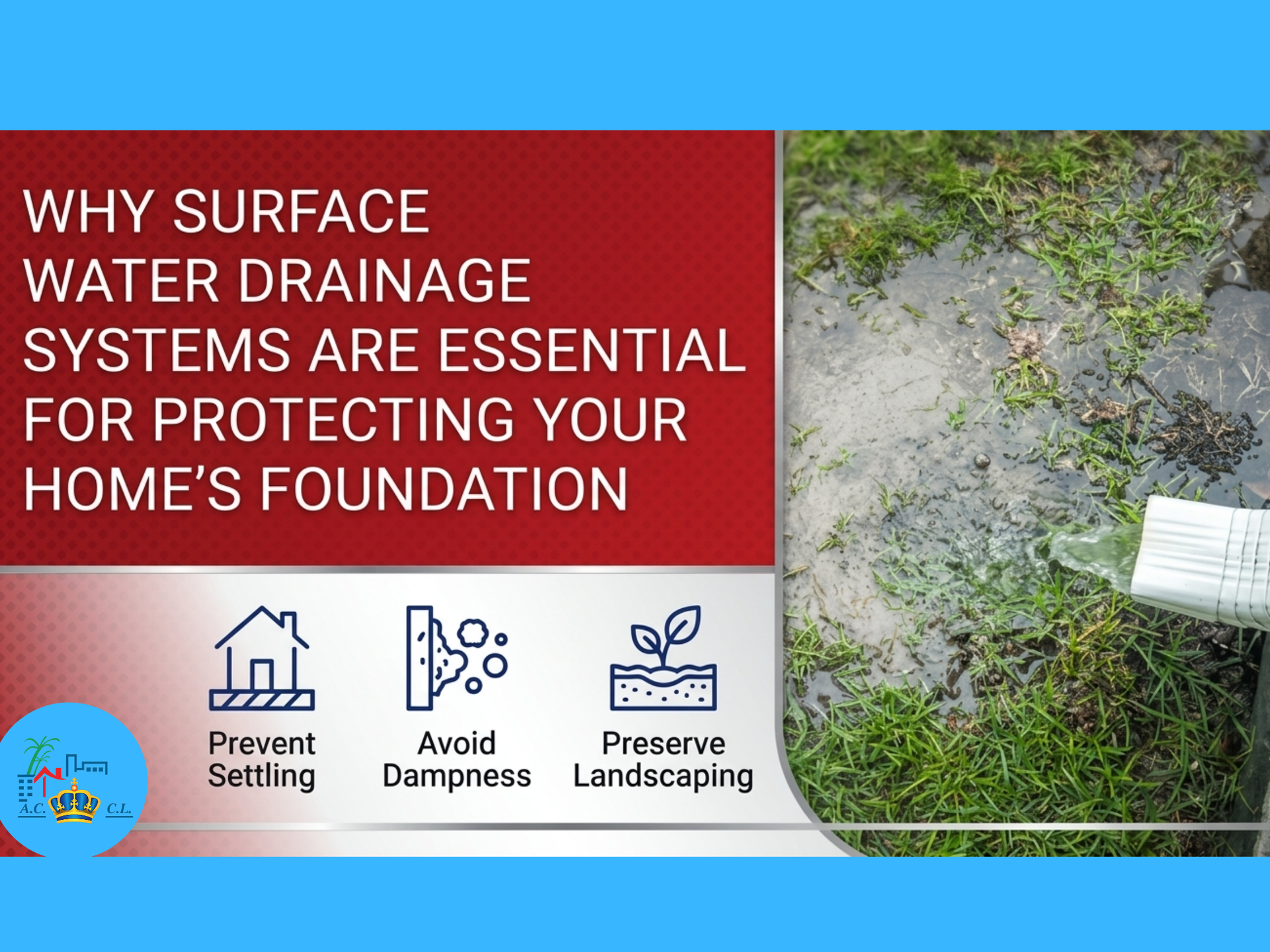
Gutters collect roof water, while downspouts move it away from the home.
Weeping Tile Systems
These systems collect groundwater and reduce hydrostatic pressure around the foundation.
Waterproofing Membranes
Exterior waterproofing membranes create a barrier that prevents water penetration.
Drainage Boards
Drainage boards direct groundwater toward drainage systems while protecting foundation walls.
When these systems work together with proper grading, your home gains maximum protection against water intrusion.
The Long-Term Benefits of Proper Grading
Correct grading offers numerous advantages:
Reduced Risk of Basement Leaks
Water is directed away before it has an opportunity to reach the foundation.
Lower Hydrostatic Pressure
Less water around the foundation means less pressure against basement walls.
Improved Foundation Protection
Reducing moisture exposure helps extend the life of the foundation.
Better Landscaping Performance
Proper drainage helps prevent soil erosion and protects gardens and lawns.
Increased Property Value
A dry, well-maintained property is more attractive to potential buyers.
When Should You Consider Professional Help?
If you notice recurring water issues, standing water, or signs of foundation moisture, a professional assessment may be beneficial.
Water problems rarely improve on their own. Addressing drainage concerns early can help prevent larger waterproofing and structural issues in the future.
Protect Your Foundation with ACCL Waterproofing
At ACCL Waterproofing, we understand that effective waterproofing begins with proper water management.
Our team provides comprehensive solutions including:
✅ Exterior Waterproofing
✅ Foundation Crack Repair
✅ Weeping Tile Installation
✅ Drainage Solutions
✅ Foundation Protection Systems
By addressing grading and drainage concerns early, homeowners can protect their foundations and avoid costly repairs down the road.
Contact ACCL Waterproofing
Corporate Head Office
124 Wilson Rd S
Oshawa, ON L1H 6C1
📞 West: 1 (416) 759-2995
📞 East: 1 (905) 448-5909
📞 Toll Free: 1 (866) 701-8484