Waterproofing Concrete: ACCL Waterproofing
Waterproofing Concrete: ACCL Waterproofing
You can waterproof concrete from the positive (external) side, negative (internal) side, or from within the concrete itself to make it truly waterproof—that is, to prevent water passage while also resisting hydrostatic pressure (integral systems). Although sheet membrane waterproofing is the most extensively utilized positive-side method, breakdowns and restrictions are widespread and costly.
It’s challenging to keep up with advances in membranes and crystalline admixtures, and both technologies have seen significant developments. Here’s a quick rundown to help you make your decision.
Membrane Sheet Systems
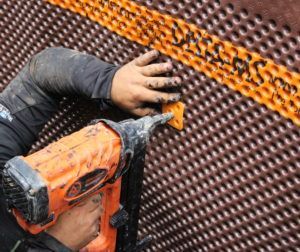
A sheet membrane made of polymer components combined with asphalt and adhered to a polyethylene sheet is known as cold-applied polymer-modified bitumen. When compared to asphalt alone, the polymer is merged with the asphalt to generate a more viscous and less temperature-sensitive elastic material. These self-adhering sheets are free of the hazardous chemicals linked with asphalt adhesion. They also boost tensile strength, acid resistance, resilience, self-healing, and bonding ability.
Despite these developments, there are still drawbacks. Membranes require sealing, lapping, and finishing of seams at the corners, edges, and between sheets, which can be difficult to do. Sheet membranes must also be applied with a smooth finish that is free of cavities, honeycombs, and protrusions. Protection boards must be installed since the membrane can puncture and rip during backfilling.
Despite these disadvantages, sheet membranes have been the industry standard in waterproofing for many years and continue to dominate the market. Impact resistance, hardness, and overall longevity are reasons for their continued use when compared to other membrane solutions.
Membranes that are treated w ith liquid
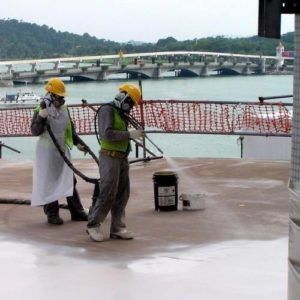
Liquid-applied membranes are commonly made up of urethane or polymeric asphalt (hot or cold-applied) in a solvent base and can be applied with a brush, spray, roller, trowel, or squeegee. These membranes, which have high elastomeric qualities, are frequently put to the positive side of cured concrete. Negative-side applications are now possible because to recent technological advancements.
The thickness and uniform application of liquid-applied membranes are critical for successful waterproofing. They necessitate professional, experienced labour, a clean and dry substrate — which can be a challenge in the construction environment — a protection layer before backfilling, correctly cured concrete to avoid adhesion and blistering issues, and, for horizontal applications, a vapour barrier. When exposed to UV light, liquid-applied membranes degrade and cannot tolerate foot traffic. Toxic and dangerous volatile organic molecules are also present in the liquids (VOCs).
Liquid-applied membranes function well on projects with many plane transitions, elaborate geometric designs, and protrusions, but they are normally employed only when premade sheets fail.
Admixtures
A new sort of waterproofing has been employed all around the world for the past three decades. These chemically reactive integrated additive systems are added to concrete at the batching plant or on-site. They turn the concrete itself become a water barrier, rather than establishing a barrier on the positive or negative side of the concrete. Densifiers, water repellents, and crystalline admixtures are all examples of integral concrete waterproofing systems.
Densifiers react with the calcium hydroxide generated during hydration to produce a by-product that enhances concrete density while slowing water migration. They aren’t often classified as waterproofing or repellant materials because they can’t seal cracks or joints. Additional waterproofing solutions are required to protect concrete from damage and deterioration when it is subjected to hydrostatic pressure.
The term “hydrophobic” refers to water repellents. Oils, hydrocarbons, stearates, and other long-chain fatty acid derivatives are common ingredients in these liquids. While hydrophobic systems are effective in damp-proofing, they are less effective at resisting liquid under hydrostatic pressure. Induced stresses produce cracking in concrete, which allows water to pass through. As a result, water repellents’ performance is mainly dependent on the concrete itself.
Admixtures with crystals
Crystalline-based systems are usually dry, powdery, and have a hydrophilic character. Unlike its hydrophobic competitors, crystalline systems utilize available water to create crystals inside concrete, successfully blocking moisture from damaging the material. They prevent water from entering from any direction because the concrete acts as a water barrier. When demolition happens, the crystalline formula has no VOCs and can be totally recycled.
In addition, crystalline admixtures have advantages in terms of installation. Unlike traditional membrane waterproofing, which is labor-intensive and costly, crystalline admixtures can be delivered in dissolvable, pulpable bags that are tossed into the concrete batch during mixing. By integrating stages with concrete placement, the building schedule is shortened and labor expenses are reduced.
In applications where there is a lot of movement, integral crystalline waterproofing systems should be avoided. Crystals align in a three-dimensional array during the crystallization process, which fractures when subjected to extreme movement. Areas that require flexibility and are subject to repeated movement, such as plaza decks or rooftops, should be waterproofed in a different manner.
Choosing the best product
In the construction industry, efficiency is crucial, and choosing the correct concrete waterproofing product for the task may make or break a project’s deadline. Concrete waterproofing manufacturers are collaborating with contractors more closely than ever before to understand their project’s specific requirements and guarantee they have the proper technology to safeguard their structures.
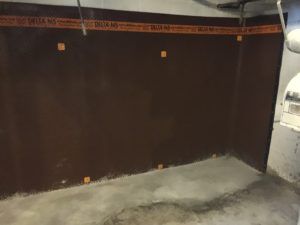
Take advantage of the warmer summer months to have us look at your basement and help you determine how best to address your basement leakage problems.
Get the job done RIGHT – Hire a professional Waterproofing company!
Want to know more about our waterproofing process? Give us a call at 416-759-2995
Rely On our ACCL Wet Basement Waterproofing Experts
Don’t Drown in a wet basement!
Rely On Wet Basement Waterproofing Experts in Toronto
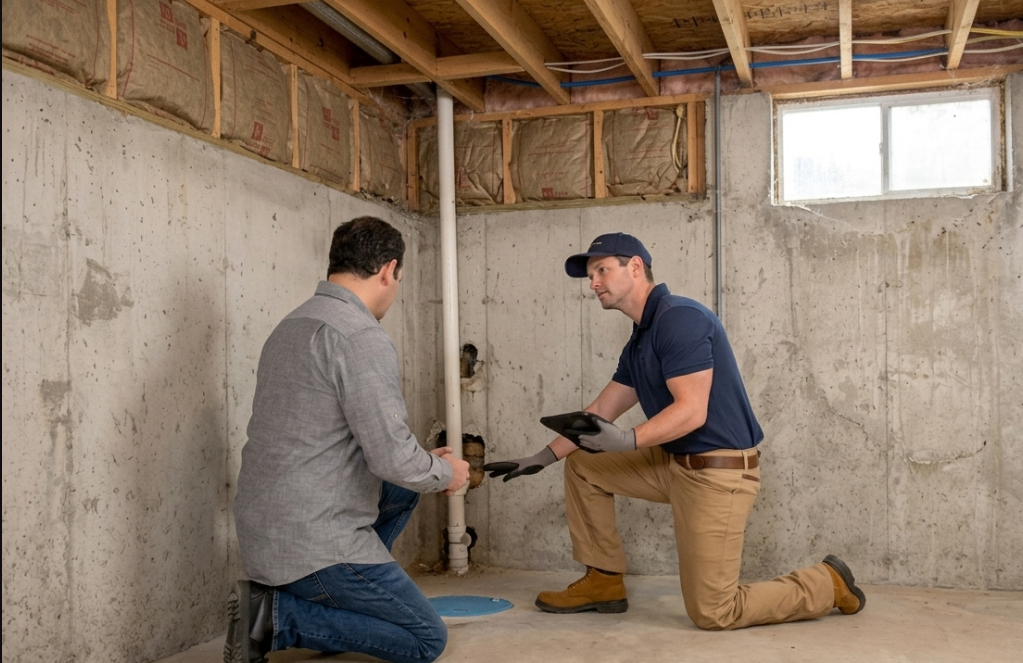
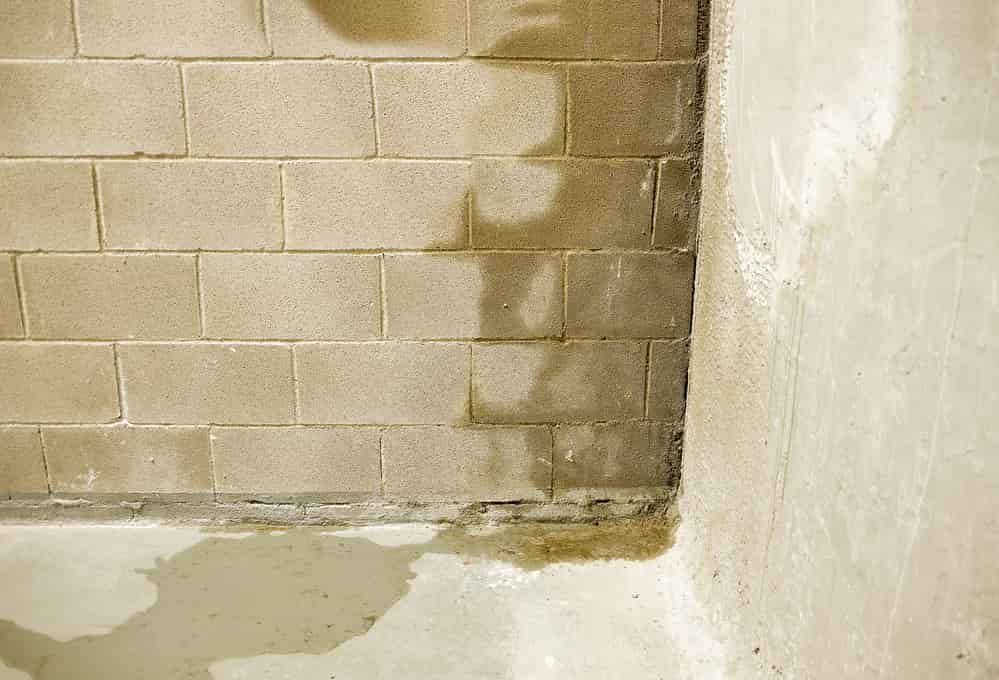
If you’ve noticed foundation cracks, spots, water, mold, and mildew, don’t ignore the signs or it could lead to more damage and possible health effects.
The basement waterproofing specialists at ACCL Waterproofing know how to repair your basement and foundation walls and keep moisture out of your basement. We would be pleased to develop a guaranteed solution to keep your basement dry!
The post Waterproofing Concrete: ACCL Waterproofing appeared first on ACCL Waterproofing.